
Indonesian Economy at a Crossroads: Maintaining Foundations Amidst Political Turmoil and Market Sentiment

The Indonesian economy shows strong fundamentals but is being tested by global turmoil and 'Sell Indonesia' sentiment. Political stability and governance are crucial for attracting investment and maintaining economic resilience until 2027.
BERITATOP - The Indonesian economy is currently facing a complex landscape, where fundamental strengths are tested by global volatility and domestic political dynamics. The government, through the Ministry of Finance, continues to express optimism about the national economic resilience, even amidst challenges expected to peak towards the year 2027.
However, this optimism confronts the reality of financial markets, which sometimes exhibit less conducive sentiment, such as the "Sell Indonesia" phenomenon that briefly became a trend. The interaction between economic policies, political stability, and investor perception is crucial in determining the future direction of the economy.
Indonesian Economic Fundamentals Amidst Global Volatility
Government Optimism and Fundamental Strengths
The Minister of Finance consistently asserts that Indonesia's economic fundamentals remain strong and ready to face various dynamics. This statement is based on a series of macroeconomic indicators showing stability and sustained growth.
One of the pillars of this strength is stable gross domestic product (GDP) growth, supported by robust domestic consumption and continuous investment inflows. Inflation is also relatively controlled, within Bank Indonesia's target, reflecting cautious monetary management.
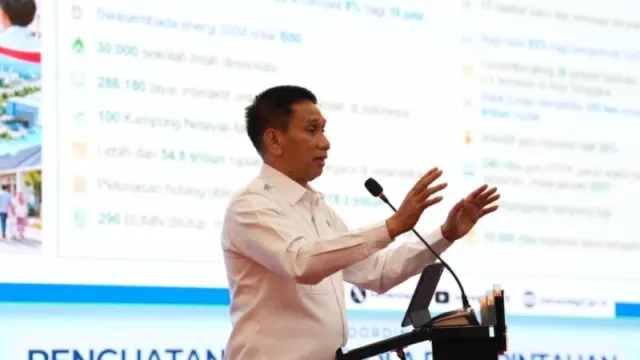
The government also highlights prudent fiscal management. The government debt-to-GDP ratio, still within safe limits, provides sufficient fiscal space to respond to economic shocks or finance strategic development programs. Adequate foreign exchange reserves also serve as an important buffer to maintain the stability of the Rupiah exchange rate.
“We continue to monitor and prepare strategies to ensure the Indonesian economy remains resilient to global challenges until 2027,” said a Ministry of Finance official on one occasion. The emphasis on that year indicates anticipation of potential significant geopolitical or macroeconomic shifts.
Market Sentiment and the "Sell Indonesia" Phenomenon
On the other hand, global financial markets often respond differently. The "Sell Indonesia" phenomenon, marked by foreign investors selling Indonesian assets, signals that there are concerns that need to be heeded.
This sentiment can be triggered by various external factors, such as rising benchmark interest rates in developed countries attracting capital back to safer markets, or fluctuations in global commodity prices affecting Indonesia's trade balance. Global geopolitical uncertainty can also lead investors to seek refuge in safe-haven assets.
Internally, perceptions of political stability, legal certainty, and the effectiveness of government policies also play a significant role. Even with strong fundamentals, if there are doubts about these aspects, investors may adopt a cautious approach.
The impact of the "Sell Indonesia" sentiment can be seen in the weakening of the Rupiah exchange rate, rising government bond yields, and pressure on the stock market. This can ultimately increase borrowing costs for the government and corporations, and potentially hinder new investments.
Domestic Political Dynamics and Investor Confidence
The economy cannot be separated from politics. Political stability and good governance are prerequisites for attracting and retaining investment, both domestic and foreign.
The Role of Governance and Corruption Eradication
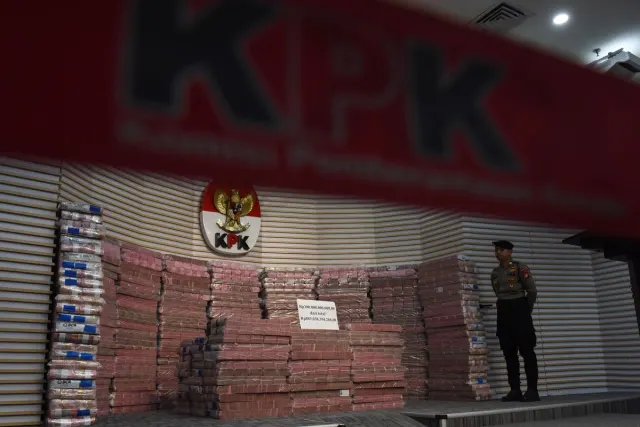
Corruption eradication efforts, actively undertaken by institutions like the Corruption Eradication Commission (KPK), have a direct impact on investor perception. Revealed corruption cases, such as the rescheduling of an examination of the Maktour boss by the KPK, demonstrate a commitment to law enforcement.
However, protracted legal processes or the perception of political intervention can create uncertainty. Investors seek legal certainty and a business climate free from corrupt practices, as these directly affect operational costs and profit potential.
An environment where corruption is rampant can increase investment risk, stifle innovation, and distort resource allocation. Therefore, consistency and independence in anti-corruption law enforcement are crucial for building trust.
Political Stability Leading Up to a Crucial Year
Leading up to the year 2027, which could be a period of political transition or post-election consolidation, political stability becomes increasingly vital. Leadership transition processes or significant policy changes can create uncertainty among market players.
Investors tend to postpone major investment decisions until the political situation is clearer and the direction of the new government's economic policies is evident. Therefore, transparent communication and a smooth transition process are essential to maintain economic momentum.
Activities reflecting public participation, such as the enthusiastic visitors at the Jakarta Fair, demonstrate societal vitality. However, social issues like house evictions or incidents of journalists being beaten, while seemingly separate, can be indicators that investors monitor regarding governance and human rights, which ultimately affect the country's investment image.
Government Strategies to Maintain Resilience
The Indonesian government has formulated various strategies to maintain economic resilience amidst global and domestic challenges. The main focus is on adaptive and pro-growth policies.
Adaptive Fiscal and Monetary Policies
Bank Indonesia and the Ministry of Finance work closely in formulating adaptive fiscal and monetary policies. Fiscal policies are directed towards maintaining budget discipline, optimizing state revenue, and ensuring effective government spending to support growth.
Monetary policy, on the other hand, focuses on controlling inflation and stabilizing the Rupiah exchange rate through interest rate instruments and market interventions if necessary. Good coordination between these two institutions is essential to create a stable macroeconomic environment.
Attracting Investment and Strengthening Competitiveness
Furthermore, the government continues to strive to attract foreign direct investment (FDI) and domestic investment by improving the business climate. This includes simplifying regulations, tax incentives, and developing infrastructure that supports economic activities.
Strengthening competitiveness is also pursued through improving the quality of human resources, developing high value-added economic sectors, and promoting industrial downstreaming. These initiatives are expected to create jobs and boost exports.
Indonesian Economic Outlook Towards 2027
Leading up to the year 2027, Indonesia's economic outlook will heavily depend on the government's ability to navigate global and domestic complexities. The balance between maintaining macroeconomic stability and fostering inclusive growth will be key.
Political factors, including legal certainty and good governance, will continue to be the primary determinants of investor confidence. A stable and predictable government in terms of policy will be more capable of attracting capital and driving economic expansion.
Indonesia possesses great potential with its vast domestic market and abundant natural resources. However, this potential can only be maximized if supported by a strong policy framework, effective implementation, and a conducive political environment.
The Indonesian economy is indeed strong fundamentally, but political dynamics and global market sentiment will always be determining factors that must be managed wisely. Partnership between the government, the private sector, and civil society will be key to achieving sustainable growth.
Key Points
- The Indonesian economy faces global and domestic challenges, balancing government optimism with cautious market sentiment.
- The 'Sell Indonesia' phenomenon reflects investor caution towards global interest rates and potential domestic political risks.
- Good governance and corruption eradication, as exemplified by cases handled by the KPK, are crucial for maintaining investor confidence and legal certainty.
- The government is implementing adaptive fiscal and monetary policies and striving to enhance competitiveness to maintain economic resilience until 2027.
- Political stability and consistent policy implementation are the main keys to attracting investment and achieving sustainable economic growth.
Frequently Asked Questions
Why is the global financial market showing a 'Sell Indonesia' sentiment?
The 'Sell Indonesia' sentiment can be triggered by various factors, including rising global interest rates, concerns about inflation, commodity price fluctuations, and domestic political dynamics that affect investor risk perception.
How does the Indonesian government plan to face economic dynamics leading up to 2027?
The government is focusing on strengthening economic fundamentals through adaptive fiscal and monetary policies, maintaining macroeconomic stability, and enhancing investment attractiveness by improving governance and the business climate.
What is the impact of corruption cases on investor confidence in Indonesia?
Corruption cases can erode investor confidence by creating legal uncertainty, increasing business costs, and fostering a higher perception of risk, thus potentially hindering investment flows.
What indicators show that Indonesia's economic fundamentals remain strong?
Indicators of fundamental strength include stable economic growth, controlled inflation, adequate foreign exchange reserves, and a well-maintained government debt ratio.
How does political stability affect Indonesia's economic outlook?
Political stability is vital as it creates a predictable and secure environment for investment. Political turmoil can trigger uncertainty, delay investment decisions, and disrupt the implementation of economic policies.